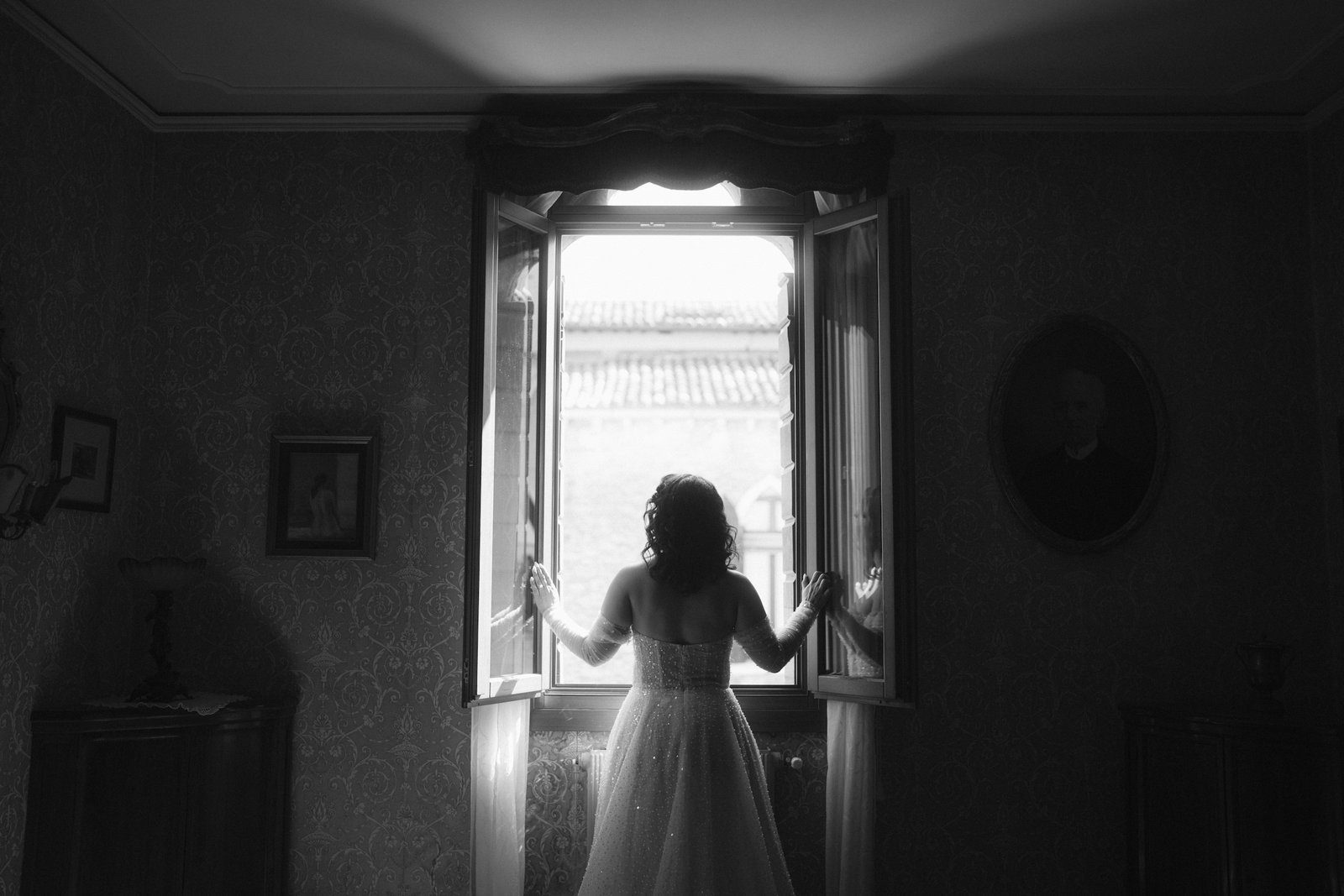
Just the two of you, or the handful of people you’d actually want there. Somewhere in Italy worth crossing a continent for, with a real ceremony, a photographer, and nothing at all that you’re doing because it’s expected.
What’s included
With twelve guests instead of two hundred, everything is visible. There’s nowhere for a bad detail to hide, which is the whole reason this is worth doing properly.
A cliff, a courtyard, a chapel, a boat, a terrace above a town. Somewhere that works for eight people and would be wasted on two hundred.
Civil, religious or symbolic, with a celebrant who understands that the two of you are the entire audience.
The documents, the town hall, the translations — and the two witnesses the law requires, if you haven’t brought anyone with you.
The one thing I insist on. With no guests to prove it happened, the photographs are what you’ll show people afterwards.
Booked and coordinated. Small doesn’t mean improvised — you’ll want to look the way you imagined.
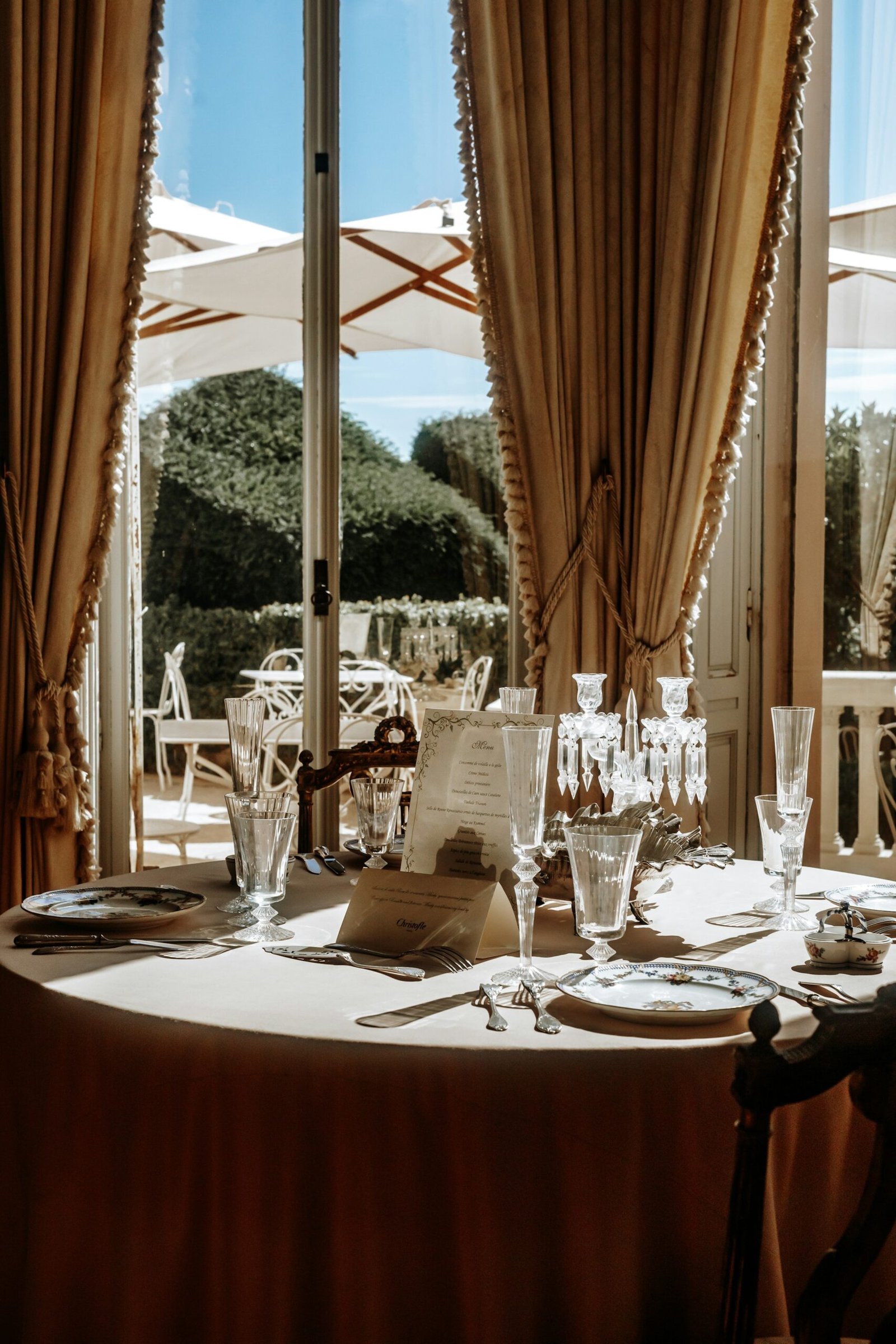
A table somewhere unforgettable for lunch or dinner, a car, a boat, a night worth staying for. This is where an elopement becomes a day rather than an hour.
How the day goes
With this few people the day can follow the light instead of a timetable. That’s most of the point.
01
Wherever you’re staying, unhurried, with hair and make-up and the photographer already there. No timeline being enforced by anyone, including me.
02
Twenty minutes, an hour, whatever it turns out to be. Set up beforehand and checked while you’re still getting dressed, so you simply arrive.
03
Photographs while the light is right, then lunch or dinner somewhere that would be impossible to book for a hundred people. The evening is yours.
Honestly
It’s for you if
The idea of two hundred people watching you make promises is the part you’ve been dreading.
You’d rather spend the budget on the place, the food and the photographs than on the guest list.
You want to marry somewhere that couldn’t hold a large wedding anyway.
Your families are spread across several countries and gathering them all is a project in itself.
You’re happy to celebrate with everyone else later, at home, in whatever form suits.
Think again if
You’d be doing it mainly to avoid a difficult conversation with your families.
One of you wants the big day and the other is going along with it quietly.
The guest list keeps growing every time you discuss it — that’s a small wedding, not an elopement, and it’s planned differently.
You want the dancing, the speeches and the room full of people you love. Those are good reasons, and they belong to a different day.
Questions
Yes, if you want it to be. A civil ceremony in Italy is a real marriage, recognised at home, with the same paperwork as any other wedding — there’s no lesser version of it because there are eight people watching.
Some couples prefer to sign at home and keep a symbolic ceremony for here. Both are perfectly ordinary choices, and which one suits you is the first thing we work out.
No. Italian law requires two, and if you’re arriving alone I arrange them — quietly and properly, so it’s a formality rather than an awkward moment with strangers.
Most couples tell them beforehand rather than after, and most families come round faster than expected once they understand it isn’t a rejection of them.
A lot of couples then hold a party at home a few weeks later — no ceremony, no formality, just everyone together. It tends to defuse the whole thing, and it’s usually a better party than a wedding reception.
Three to six months is comfortable. The constraint is almost never the planning — it’s the paperwork, which takes as long as it takes regardless of how few guests you have.
If you’re eloping symbolically rather than legally, it can be much quicker.
Of course. Up to about twenty people it still plans like an elopement — one table, one place, no seating chart and no logistics to speak of.
Beyond that it quietly becomes a small wedding, which is a different job and priced differently. I’ll tell you when you’ve crossed the line rather than let you discover it.
Places that would be impossible for a large wedding: a terrace over the sea, a small chapel, a boat, a courtyard belonging to somebody’s family, the top of somewhere with a long walk to get there.
Being few is what makes those places available to you. It’s the single best argument for doing it this way.
Investment
From €2,000
My fee. Venue, celebrant, photographer, flowers and the meal afterwards sit in your own budget.
Whether the marriage is legal here or symbolic, since the paperwork is most of the work. Then how remote the place is, how many of you there are, and whether the day ends after the photographs or runs into a dinner and a night somewhere.
Eloping costs less than a wedding because there are fewer people to feed, not because there’s less to organise. The fee reflects the work, and the quote separates it clearly from everything else you’ll spend.
How pricing worksFrom a couple
A dream come true, with so much magic and such care over the details.